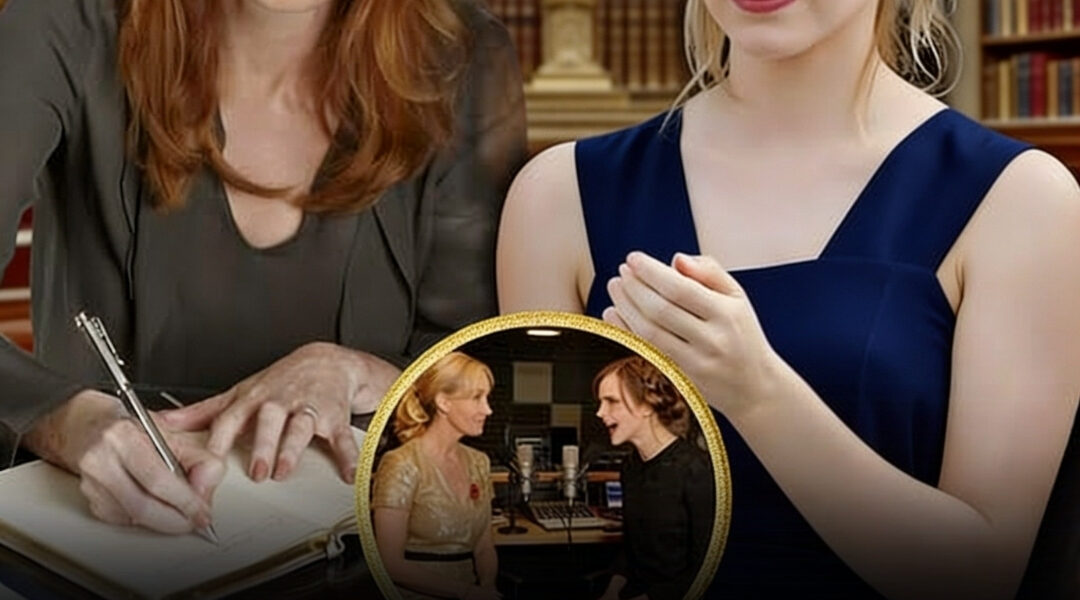
The public disagreement between Emma Watson and J.K. Rowling has become a focal point in ongoing global conversations about gender, feminism, and the responsibilities that come with cultural influence. Both women are closely tied through the legacy of the Harry Potter franchise, which shaped a generation of readers and viewers. Yet their diverging views on gender identity and women’s rights have revealed a deeper tension between artistic legacy and personal belief systems in the public sphere.
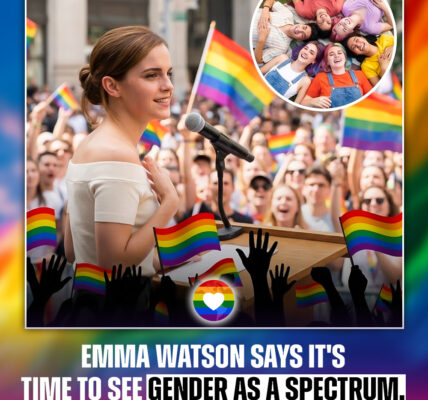
Emma Watson, who rose to prominence as Hermione Granger, has spent much of her adult life advocating for gender equality. Her work with the UN Women and the HeForShe campaign positioned her as a leading voice in contemporary feminism. For Watson, feminism is rooted in inclusivity, intersectionality, and the expansion of rights and recognition for all individuals, including transgender people. Her stance reflects a broader shift in modern feminist discourse, which increasingly emphasizes diversity of experience and challenges rigid definitions of identity.
On the other hand, J.K. Rowling, the author behind the Harry Potter universe, has drawn both support and criticism for her comments regarding sex, gender identity, and women’s spaces. Rowling has argued that biological sex remains a crucial category in discussions about women’s rights, particularly in areas such as safety, healthcare, and legal protections. While some view her perspective as a defense of women’s rights grounded in material reality, others see it as exclusionary toward transgender individuals. This divide illustrates a fundamental philosophical disagreement about how gender should be understood in law, society, and culture.
Watson’s response to Rowling’s views—framed as a rejection of what she perceives as outdated thinking—signals a generational and ideological shift. Younger activists and public figures often approach feminism through a more expansive and fluid lens, influenced by developments in gender theory, human rights discourse, and social movements. In this sense, Watson’s position is not only personal but also representative of a broader cultural evolution that challenges long-standing norms and seeks to redefine inclusion.
The clash also raises questions about the relationship between creators and the communities shaped by their work. The Harry Potter series has long been associated with themes of acceptance, resistance to injustice, and the celebration of difference. For many fans, Watson’s stance aligns more closely with these values, while Rowling’s comments appear to complicate or even contradict them. This tension has led to debates about whether and how audiences should separate a creator’s personal beliefs from their artistic contributions.
Moreover, the situation underscores the power and responsibility of public figures in shaping discourse. In an era where social media amplifies every statement, the words of influential individuals can have far-reaching consequences. Watson’s willingness to speak out demonstrates a commitment to her principles, even when it involves challenging someone who played a pivotal role in her career. At the same time, Rowling’s persistence in expressing her views highlights the importance she places on engaging in what she sees as necessary debates, regardless of backlash.
Ultimately, this disagreement is not merely a personal conflict but a reflection of larger societal debates that remain unresolved. Questions about identity, rights, and the boundaries of inclusion continue to evolve, often generating passionate and polarized responses. The exchange between Watson and Rowling serves as a reminder that progress is rarely linear; it is shaped by dialogue, disagreement, and the willingness to confront uncomfortable questions.
As the conversation continues, it invites audiences to think critically about their own perspectives. It challenges individuals to consider how values such as equality, respect, and freedom of expression can coexist in a diverse and complex world. In this way, the clash between these two influential figures becomes more than a headline—it becomes part of an ongoing effort to define what fairness and inclusion truly mean in the 21st century.